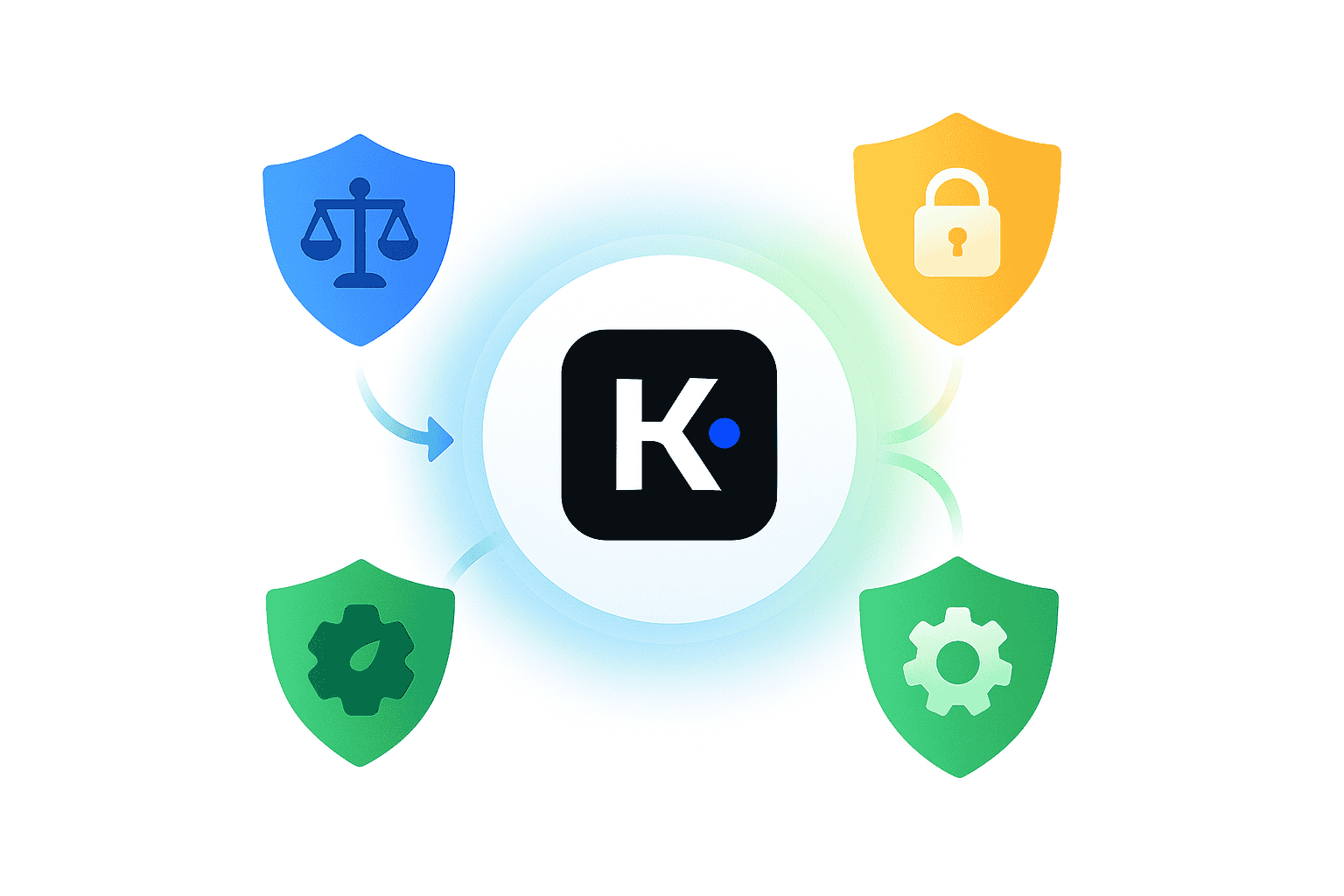

As artificial intelligence becomes central to business operations, companies are turning to advanced models like Kimi AI to boost productivity and simplify complex tasks. Kimi AI’s capabilities can transform how organizations handle information and serve customers. However, with this powerful tool comes a critical responsibility: ensuring ethical use of Kimi AI across all business applications. Corporate decision-makers – from CEOs and CTOs to compliance officers and product teams – must understand the ethical considerations and governance measures required when deploying Kimi AI at scale.
Using AI irresponsibly can lead to bruised reputations, stakeholder distrust, and even legal risks. This comprehensive guide explores what enterprises need to know about ethical AI use, covering global frameworks, key principles, real-world examples, and best practices for governance.
Why Ethical AI Use Matters for Businesses
Adopting AI without proper oversight can expose companies to serious risks and negative consequences. Studies warn that AI errors or misuse can damage a firm’s reputation, drive away investors, and invite regulatory penalties. Crucially, even if an AI system makes a decision, human management will be held accountable for the outcome. For example, if Kimi AI made an unfair hiring recommendation or an incorrect financial prediction, the company’s leadership would face the fallout.
Understanding AI ethics helps business leaders mitigate liability from improper data use or biased algorithms, protecting the company from legal and ethical risks. In high-stakes sectors like finance or healthcare, an AI mistake could harm individuals and incur compliance violations. Conversely, companies that proactively govern AI usage and align it with their mission will build trust with customers and regulators, gaining a competitive advantage in the AI-driven economy.
Global Ethical AI Frameworks and Standards
Businesses do not have to start from scratch in defining AI ethics – several international frameworks provide guidance on trustworthy AI:
- OECD AI Principles (2019) – The first intergovernmental AI standard, emphasizing innovative yet trustworthy AI that respects human rights and democratic values. The OECD principles outline key values: fairness and inclusion, transparency and explainability, robustness and safety, privacy, security, and accountability. Adhering countries use these principles to shape policies that maximize AI’s benefits while minimizing risks.
- EU Ethics Guidelines for Trustworthy AI (2019) – A widely cited framework defining seven requirements for ethical AI: human agency and oversight, technical robustness and safety, privacy and data governance, transparency, diversity and non-discrimination (bias mitigation), societal well-being, and accountability. In essence, AI should be lawful, ethical, and robust, with measures to ensure human oversight, risk management, fairness, and responsibility throughout its lifecycle.
- ISO/IEC 42001:2023 (AI Management Systems) – A new international standard offering a structured framework for AI governance across the entire lifecycle. ISO 42001 covers governance structures, risk management processes, transparency, and ethical use of AI in organizations. It helps enterprises implement controls for bias mitigation, explainability, accountability, and oversight in AI systems, aligning with emerging regulations like the EU AI Act. Obtaining such certification demonstrates a company’s commitment to responsible AI.
These frameworks reinforce a common message: companies should integrate fairness, transparency, privacy, safety, and accountability into all AI initiatives. By referencing global standards, organizations signal due diligence and keep pace with evolving compliance expectations.
Conducting Ethical AI Risk Assessments
A cornerstone of ethical AI deployment is performing thorough risk assessments before and during the use of tools like Kimi AI. Businesses must evaluate how an AI system could potentially cause harm or violate norms, and then put safeguards in place. Best practices include conducting an AI Impact Assessment (AIIA) analogous to a data protection impact assessment – this means examining the societal, ethical, and legal impacts of the AI, especially for high-risk applications. For example, a bank using Kimi AI to approve loans should assess risks of bias in lending decisions and compliance with fair lending laws.
Organizations can leverage established risk management frameworks for AI. The NIST AI Risk Management Framework (AI RMF) is one such tool, offering guidance on mapping, measuring, and managing AI risks with principles like explainability, robustness, fairness, and accountability. Likewise, ISO/IEC 42001 mandates that after identifying AI risks, companies must implement controls and continuously monitor and improve the AI system. This includes setting up processes to detect issues (like drifts in model behavior or new threats) and respond quickly.
Crucially, risk assessment for AI is not a one-time task but an ongoing process. As Kimi AI gets updated or as its use cases evolve, companies should re-evaluate potential impacts (for instance, if deploying Kimi in a new geography or for a new function, consider any new legal requirements or cultural ethical norms). Proactively managing risks through formal assessments helps prevent ethical lapses and demonstrates accountability should regulators inquire about the company’s AI practices.
Ensuring Fairness and Reducing Bias
Fairness is a key ethical principle in AI use – it means Kimi AI’s outputs should be free from unjust bias and equitable across different groups. To achieve this, companies need to address the risk of algorithmic bias in both Kimi’s training data and its deployment context. Fair AI outputs should meet defined fairness criteria (e.g. similar error rates for all demographic groups, or decisions that do not disproportionately disadvantage a protected class). This is especially critical in use cases like hiring, lending, or medical diagnosis, where biased decisions can lead to discrimination.
To reduce bias, organizations should implement rigorous bias testing and mitigation strategies. Experts recommend involving diverse perspectives in Kimi’s development and evaluation to spot blind spots. For instance, if Kimi AI will screen job applicants, the team should include members attuned to diversity and HR compliance, and they should test the model with varied candidate data. Monitoring outputs for disparate impact is vital; if bias is detected, the model or data should be adjusted (e.g. reweighting training data or excluding problematic features). Some companies even employ an AI bias expert or ethicist on staff to audit models and outcomes continuously.
Real-world incidents underline why vigilance on bias is needed. A famous example was an AI recidivism scoring tool that was found to mislabel Black defendants as high-risk at twice the rate of white defendants, due to reflecting historical policing biases. In a business context, imagine Kimi AI inadvertently favoring resumes from a certain region or background – a form of bias that could go unnoticed without audits. In fact, one company discovered its AI hiring model was skewed toward applicants from specific regions, a distortion traced back to biased training data. Only through careful documentation and review did they notice and correct this bias, instituting regular bias tests going forward.
The lesson is clear: bias detection and mitigation must be built into the AI lifecycle. By defining fairness metrics, testing Kimi’s outcomes against those metrics, and retraining or tuning the system as needed, companies can ensure Kimi AI’s decisions are fair and compliant with anti-discrimination laws. Reducing bias isn’t just ethically right – it also protects the business from reputational damage and legal liability.
Transparency and Explainability
Using Kimi AI ethically means making its workings as transparent and explainable as possible to stakeholders. Transparency entails that people impacted by AI decisions (be it customers, employees, or regulators) can understand what factors led to those decisions, and that the company is open about when and how AI is used. In practice, this has two major aspects:
- Explainable Decisions: Business teams should be able to interpret and explain Kimi AI’s outputs in understandable terms. If Kimi provides a recommendation (say, denying a loan or flagging a transaction), there should be an accessible rationale – e.g., “The loan was denied due to low income and credit score, based on the criteria set in the model.” This might involve using tools or techniques that shed light on the AI’s reasoning (such as feature importance analyses or simplified rule approximations of a complex model). Explainability is crucial in domains like finance, where regulations may require explaining automated decisions to customers.
- Disclosure of AI Use: Ethical use also means not deceiving users about AI. Customers or employees interacting with Kimi’s outputs should know that they are generated by an AI and not human-originated. For example, if Kimi AI powers a customer service chatbot, the bot should clearly introduce itself as an AI assistant. The EU guidelines explicitly advise that users be informed they are dealing with a machine, to maintain honesty and trust. Transparency in this sense prevents manipulation and maintains accountability.
To enable transparency, companies should maintain strong documentation and traceability for their Kimi AI systems. Every AI decision or recommendation should be logged with relevant data – this audit trail allows internal and external reviewers to trace how an outcome was reached. Traceability turns an AI from a “black box” into a system whose data and decision history can be audited step by step. Indeed, upcoming regulations (like the EU AI Act) are likely to mandate technical documentation of AI systems, from training data through risk assessments, specifically to ensure traceability and accountability. Embracing this practice now is wise. In one case, thorough documentation (a “model card” describing data, metrics, and owners) helped a company uncover an unexpected bias in their model and assign clear responsibility for its management. This illustrates how transparency mechanisms not only foster trust, but also improve the quality and oversight of AI.
In summary, transparency and explainability build trust. They reassure customers that Kimi’s recommendations are fair and based on reason, and they equip compliance teams with evidence of how decisions are made. By providing clear explanations and maintaining open documentation, companies can use Kimi AI as a “glass box” rather than a black box.
Data Privacy and Security
Deploying Kimi AI ethically requires strict attention to data privacy and security. AI systems are hungry for data, but companies must ensure that any personal or sensitive information is handled in accordance with privacy laws and best practices. Key considerations include:
- Privacy Compliance: Any personal data input into Kimi AI (customer profiles, employee records, financial details, etc.) should be collected and used with proper consent and legal basis. Regulations like the EU’s GDPR impose heavy fines for misuse of personal data, so businesses need to be vigilant that using Kimi doesn’t inadvertently violate privacy rights. For instance, feeding Kimi large datasets should involve anonymizing or pseudonymizing personal identifiers wherever possible. If Kimi AI is cloud-based, companies should review the provider’s terms to ensure data won’t be retained or seen by unauthorized parties.
- Secure AI Operations: Security is the foundation that makes privacy possible. Companies must keep the data Kimi uses (and generates) safe from unauthorized access or leaks. This involves applying robust cybersecurity measures: encrypt data in transit and at rest, enforce strict access controls (only authorized staff or systems can invoke Kimi for sensitive tasks), and monitor for any unusual activity. IT teams should also harden the Kimi AI integration against external attacks – for example, ensuring that APIs or plugins involving Kimi cannot be easily exploited.
A cautionary tale in AI security comes from real incidents at a global electronics company, where engineers inadvertently leaked sensitive corporate data by pasting source code and meeting notes into an AI chatbot. The AI service retained that data (as they often do for training), creating a serious privacy breach. These incidents prompted urgent corporate policy changes, including strict limits on what employees can share with AI tools and disciplinary measures for violations. The message for any enterprise is clear: unfettered AI use can create new insider threats if employees input confidential information without caution.
To prevent such issues with Kimi AI, companies should establish clear guidelines on data handling: e.g. never input personally identifiable information (PII) or confidential business data into Kimi unless it’s through approved, secure channels that ensure compliance. Some organizations choose to opt for on-premise or private instances of AI models like Kimi for added data control, or use encryption and tokenization tools to mask sensitive data before analysis. Additionally, conducting regular security audits of the AI ecosystem (checking that logs, databases, and outputs don’t contain private data exposure) is an important practice.
Finally, maintaining privacy goes hand-in-hand with maintaining customer trust. Surveys and experts note that if AI does not guarantee privacy, businesses will struggle to keep customer confidence.
By using Kimi AI in a privacy-preserving way – securing data and respecting user consent – companies demonstrate respect for individual rights and reinforce their reputation as trustworthy stewards of data.
Human Oversight and Accountability
No matter how advanced Kimi AI becomes, human oversight remains a vital ethical requirement. AI should augment human decision-making, not replace human responsibility. The OECD and EU frameworks both stress “human-centered” AI, meaning humans must maintain control and the ability to intervene or override decisions when necessary. In corporate settings, this translates to having qualified people review and guide Kimi’s operations, especially in high-impact use cases.
Human-in-the-loop: Companies should decide at what points human review is mandatory. For example, if Kimi AI flags an unusual financial transaction as fraudulent, a human analyst might need to verify before action is taken. In healthcare, any diagnosis or treatment recommendation from AI should be confirmed by a medical professional. Human oversight helps catch AI mistakes (since AI is not infallible) and ensures contextual judgment. As the EU guidelines put it, humans should play an active role throughout the AI’s life cycle to ensure ethical outcomes. Kimi AI can process information at superhuman speed, but only people can align its use with common sense, empathy, and values in complex situations.
Clear Accountability: Alongside oversight is the need to define who is accountable for Kimi AI’s actions. An AI system itself cannot be punished or held liable – if something goes wrong, a “throat to squeeze” is needed (to quote an old IBM mantra). Organizations must therefore establish a chain of responsibility: which team or executive is answerable if Kimi produces a harmful outcome? The Harvard Business School notes that a computer should never make an unchecked management decision; ultimately, a human must be accountable. This could mean assigning an AI owner for each Kimi AI application – someone who signs off on its use and monitoring. Some firms institute AI Ethics Committees or Responsible AI Officers who oversee compliance and take responsibility for ethical issues. In practice, if Kimi AI makes an error (say it rejects a perfectly eligible loan applicant due to a glitch), the accountable human can investigate, apologize, and remedy the situation.
Leading tech companies have formalized accountability by adopting principles and organizational structures for AI ethics. For instance, Microsoft’s responsible AI principles include explicit goals for transparency and accountability, and they have created an internal Office of Responsible AI to enforce standards across the company. This model is instructive: an AI governance body (whether a dedicated office, committee, or task force) can regularly audit Kimi’s use, handle incidents, and update policies as needed.
In summary, ethical use of Kimi AI demands human governance at every step. Humans should monitor outcomes, ready to intervene (human-on-the-loop), and the organization must determine who answers for AI-driven decisions. By keeping humans in charge and accountable, companies ensure that Kimi remains a tool under human command – one that supports business goals without undermining them through unchecked autonomy.
AI Governance and Internal Policies
To operationalize all the above principles, companies should establish robust AI governance models and internal policies for Kimi’s use. Governance refers to the structures and processes that ensure AI is used responsibly, aligning with corporate values and external regulations. Here are key components of effective AI governance in an enterprise context:
Formal Governance Structure: It is highly recommended to set up a dedicated group or committee that oversees AI ethics. This could be an AI Ethics Board, a cross-functional committee including IT, legal, compliance, and business unit leaders, or as mentioned, an Office of Responsible AI. The role of this body is to create guidelines, review major AI projects, and enforce accountability. For instance, before a new Kimi AI feature is launched (say an AI-powered customer analytics tool), this group should vet it for ethical risks and approve mitigation plans. Governance bodies need support from top management – executive buy-in is crucial to empower them to halt or modify projects that don’t meet standards (indeed, ISO 42001 calls for securing leadership commitment and assigning clear accountability for AI governance).
Internal AI Policy Framework: Organizations should draft an AI ethics policy or “Responsible AI Standard” that codifies the do’s and don’ts of AI usage. This policy should incorporate the principles discussed (fairness, privacy, transparency, etc.) and provide concrete rules. For example, the policy may state that Kimi AI cannot be used to automate decisions that significantly affect individuals without human review, or that all training data for Kimi must be documented and approved by the data governance team. It should also address acceptable data types, prohibited uses (e.g. no use of Kimi for generating deepfake content or discriminatory advertising), and compliance requirements. Regular training should accompany the policy – employees and developers need to be educated about these guidelines so they understand how to apply them in daily work. Many companies include AI ethics training as part of employee onboarding, especially for technical staff.
Continuous Monitoring and Auditing: Governance is not static. The AI governance team should implement ongoing monitoring of Kimi’s performance and compliance. This means setting up metrics and alerts for ethical indicators (bias metrics, incident reports, etc.), and scheduling periodic audits or reviews of AI systems. As one expert noted, an AI ethics strategy “has to have teeth” – there must be consequences or remediation if the rules are not followed. For instance, if an audit finds that a business unit used Kimi on personal data without approval, governance policies might require that model to be suspended and the team retrained. Keeping logs (who is using Kimi, for what purpose) and performing regular audits of those logs form an “audit trail” that regulators or internal compliance can examine. In fact, having such documentation readily available is becoming a regulatory expectation. As noted earlier, comprehensive documentation not only aids traceability but also forces a company to truly understand and take responsibility for its AI systems.
Incident Response and Adaptation: Despite best efforts, issues will arise – perhaps Kimi produces an inappropriate output or a new risk is discovered. A governance framework should include an AI incident response plan. This plan outlines how to quickly respond to and rectify any harm (for example, if Kimi accidentally generated misleading content, the company would have steps to pull it, correct the record, notify affected parties, etc.). Additionally, governance models must be adaptive. AI technology and laws are evolving fast; a policy from six months ago could become outdated. Thus, companies should review and update their AI policies frequently (at least annually, or whenever major new laws like the EU AI Act come into effect).
Notably, companies that have instituted such governance have seen benefits beyond compliance. They create a culture where ethical considerations are ingrained in innovation, leading to more robust and trustworthy AI solutions. An example of governance in action is how Samsung, after the AI data leak incidents, swiftly implemented internal rules limiting prompt sizes and threatened disciplinary action for policy breaches. This kind of decisive governance response can save a company from bigger disasters. In general, AI policies and governance are now “must-haves” for enterprises deploying AI, just like IT security policies – they are essential to manage risk and sustain trust in the age of AI.
Real-World Examples: Ethical vs. Unethical Uses of Kimi AI
To concretize the discussion, let’s consider some scenarios of proper and improper use of Kimi AI in business contexts:
✓ Ethical Use Case – Privacy-Preserving Data Analysis: A financial firm uses Kimi AI to analyze large volumes of transaction data for fraud detection. Before uploading data to Kimi, they anonymize customer information and strip out personal identifiers, so that no sensitive personal data is exposed. They also limit Kimi’s access strictly to necessary data. Kimi’s analysis helps identify fraud patterns quickly, improving security without compromising customer privacy or breaching regulations.
✓ Ethical Use Case – Transparent Customer Service Bot: A retailer deploys Kimi AI as an AI customer service assistant to handle routine inquiries. The chatbot clearly introduces itself as an AI and not a human agent. It provides helpful answers and, when asked for complex advice (like “Which insurance plan should I choose?”), the bot discloses its limitations or hands off to a human rather than confidently giving potentially misleading answers. The company also provides an explanation for the bot’s recommendations (e.g., “I suggest this product because it matches the preferences you gave me”). This transparent approach builds user trust and avoids manipulation.
✕ Unethical Use Case – Personal Data without Consent: A marketing team feeds Kimi AI a dataset of customers’ personal emails and purchasing history to get copywriting ideas, without obtaining customer consent. They effectively expose private communications to an AI system (and by extension, possibly to the AI provider’s servers). This violates privacy principles and likely data protection laws, since customers never agreed to have their data used for generative AI processing. It’s a misuse of Kimi that could lead to severe compliance penalties.
✕ Unethical Use Case – AI-Generated Disinformation: A media site uses Kimi AI to generate news articles and social media posts but does so to produce sensational or misleading content for clicks. They find that outrage-generating fake news attracts traffic, so they let Kimi produce manipulated narratives. This crosses ethical lines by using AI for deception. If discovered, it would irreparably harm the company’s credibility and could even result in legal action (for fraud or defamation). It’s a reminder that AI should not be used to do what would be unethical or illegal for a human.
✕ Unethical Use Case – Violating Fairness in Hiring: A company deploys Kimi AI to screen job applications but does not audit the model for bias. If the training data reflects past hiring biases, Kimi might systematically rank certain minority candidates lower. The company blindly trusts Kimi’s recommendations and ends up with a less diverse workforce. Not only is this unethical, it also exposes the company to discrimination lawsuits. The lack of human oversight and bias checks in this scenario makes it a textbook unethical implementation.
Each of these scenarios underscores an aspect of ethical AI use. The ethical examples show that with proper precautions – data anonymization, transparency, human backup – Kimi AI can be a force for good, enhancing efficiency and customer experience without ethical compromises. The unethical examples, on the other hand, illustrate how misusing Kimi (even if tempting for short-term gain or convenience) can lead to significant harm and backlash. Companies should regularly use such scenarios in training and discussions to ensure employees recognize the red lines when working with AI.
Conclusion: Harnessing Kimi AI Responsibly for Value
Implementing Kimi AI ethically is not just a matter of avoiding risk – it’s also a positive opportunity. When done right, ethical AI use can enhance business value in multiple ways. For example, Kimi AI can reduce manual errors and inconsistencies in operations, leading to safer and more reliable outcomes for customers. Automating routine tasks with AI frees up human employees to focus on creative, strategic work, while the AI handles repetitive processes without fatigue, thereby improving overall accuracy. In fields like accounting or medicine, this increased consistency (fewer human mistakes) is an ethical gain because it means fewer people are harmed by errors. Moreover, by deliberately engineering Kimi’s use to be fair and unbiased, companies might actually improve equity in decisions – for instance, a well-designed AI hiring tool could help highlight meritocratic criteria and counteract individual manager biases. These are ways Kimi AI, under strong governance, adds ethical value to the enterprise.
To summarize, ethical use of Kimi AI in business requires a multi-faceted approach: leadership commitment to responsible AI principles, concrete frameworks and policies guiding AI projects, continuous risk and bias assessment, and a culture of transparency, privacy, and accountability.
Companies must treat AI governance as a living practice – continuously updating policies (as new regulations and lessons emerge) and engaging all stakeholders (from technical teams to legal to end-users) in upholding ethical standards. Those organizations that invest in ethical AI practices now will not only avoid pitfalls but also cultivate greater trust with their customers, employees, and partners. They will be well-positioned to leverage AI innovations like Kimi to their fullest potential, safely and honorably.
In closing, Kimi AI offers transformative capabilities for enterprises, but what companies must know is that ethical responsibility goes hand-in-hand with technological power. By following the guidelines of fairness, transparency, privacy, security, and human oversight, and learning from global frameworks and real examples, businesses can confidently deploy Kimi AI to drive innovation – while doing what’s right for society and staying on the right side of history (and regulation) in the AI era.